


A New Age of Sparkle
In the world of fine jewellery, traditional mined diamonds are no longer the only option when it comes to engagement rings and elegant accessories. With increased awareness around sustainability, ethics, and budget-friendliness, modern shoppers are seeking alternatives that offer the same brilliance without the heavy price tag or environmental footprint. Among the most popular contenders are moissanite and lab-grown diamonds. While both stones offer impressive beauty and durability, they are distinctly different. Understanding the unique characteristics of each can help you choose a gem that fits not just your style, but also your values.
What Is Moissanite?
Moissanite is a gemstone originally discovered in a meteor crater in the late 19th century. What was first mistaken for diamond turned out to be silicon carbide, a naturally rare mineral with extraordinary brilliance. Since natural moissanite is nearly impossible to find in quantities suitable for jewellery, today’s moissanite is lab-created. This stone is celebrated for its high refractive index, meaning it bends light extremely well, often creating more fire or rainbow flashes than a diamond. Though not a diamond, a moissanite diamond look-alike has become a popular choice for its sparkle, affordability, and ethical sourcing.
The Allure of Lab ;Grown Diamonds
Lab-grown diamonds are exactly what the name suggests: diamonds that are created in a controlled laboratory environment rather than being mined from the earth. These diamonds are physically, chemically, and optically identical to natural diamonds, meaning they possess the same hardness, brilliance, and structural properties. The difference lies entirely in their origin. Because they are made using cutting-edge technology, lab-grown diamonds are a more environmentally responsible option, avoiding the deep ecological disruption and ethical concerns that often accompany diamond mining. Today’s consumers are increasingly drawn to these modern marvels, which offer all the elegance of mined diamonds with a lighter conscience.
Key Differences Between the Two
When comparing moissanite and lab-grown diamonds, the first thing to understand is that they are fundamentally different materials. Moissanite is silicon carbide, while lab-grown diamonds are pure carbon, just like mined diamonds. This difference in composition leads to varied performance in sparkle, hardness, and appearance. Moissanite has more fire, meaning it produces more colorful flashes of light. Some people love this extra brilliance, while others feel it looks slightly artificial compared to the more subtle sparkle of a diamond. Additionally, diamonds—whether mined or lab-grown—rate a 10 on the Mohs scale of hardness, making them the hardest known material. Moissanite, while still highly durable, rates slightly lower at 9.25, which is sufficient for everyday wear but not quite as scratch-resistant.
Appearance and Sparkle: A Matter of Taste
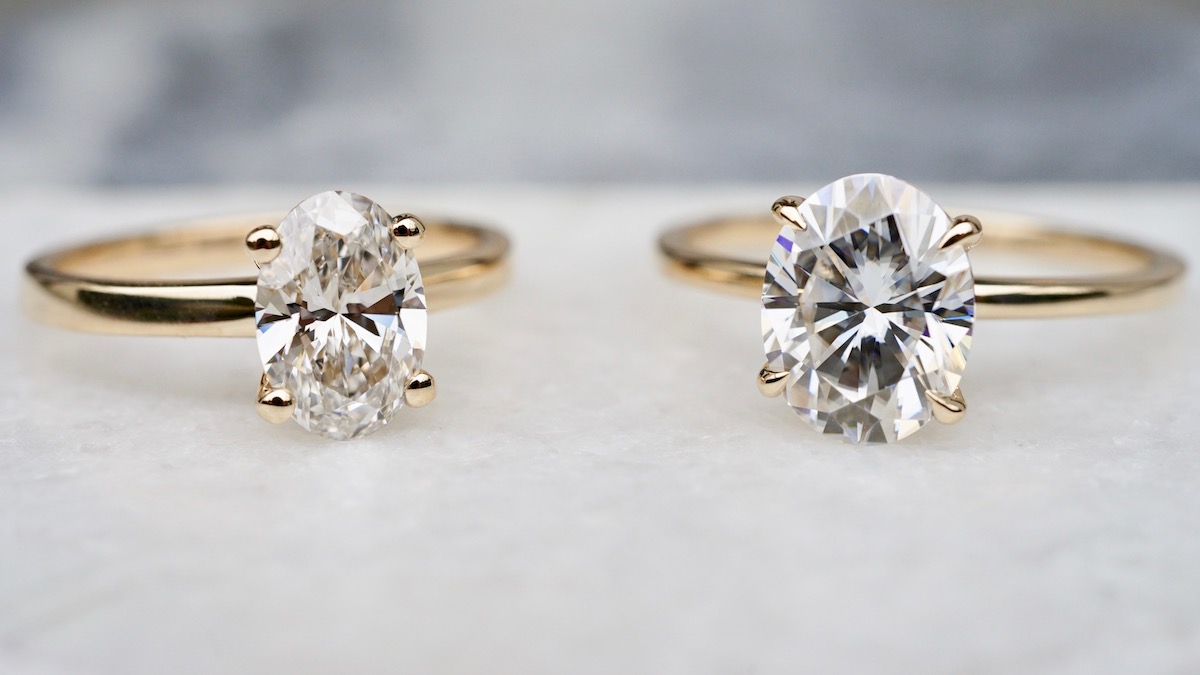
One of the most talked-about differences between moissanite and lab-grown diamonds is how they handle light. Moissanite often appears more fiery or rainbow-like under direct light, which can be eye-catching but also distinct from the crisp brilliance of a diamond. Some people fall in love with this unique look, while others find it less natural in appearance. Lab-grown diamonds, by contrast, exhibit the same light behavior as mined diamonds—white brilliance with sharp scintillation. When placed side by side, trained eyes can usually distinguish the two, but to the untrained observer, they may appear quite similar unless examined closely.
Cost Considerations
One of the strongest appeals of both moissanite and lab-grown diamonds is their affordability compared to traditional mined diamonds. However, moissanite typically comes at an even lower price point than lab-created diamonds of similar size and appearance. This makes moissanite an attractive option for buyers who want a larger stone without significantly increasing their budget. Lab-grown diamonds, while more expensive than moissanite, still offer savings of 30–40% or more compared to mined diamonds. The price difference between the two alternatives often leads to personal decisions based on priorities like size, sparkle preference, and material authenticity.
Ethical and Environmental Impact
Both moissanite and lab-grown diamonds offer ethical advantages over mined diamonds. Neither involves the social and environmental challenges associated with traditional diamond extraction, such as displacement of communities, unsafe labor practices, or habitat destruction. Lab-grown diamonds are often produced using renewable energy sources and sustainable practices, and moissanite, being completely lab-created from start to finish, avoids mining altogether. If ethics and sustainability are at the core of your decision-making, either option allows you to make a responsible and informed choice without compromising on beauty or durability.
Certification and Resale Value
When it comes to certification, lab-grown diamonds typically come with grading reports from reputable labs such as IGI or GIA. These reports assess the diamond’s cut, clarity, color, and carat weight. Moissanite, being a different gemstone entirely, does not undergo the same grading process. It may come with a certificate confirming it is authentic moissanite, but not a detailed 4Cs report like you’d find with a diamond. Additionally, while neither moissanite nor lab-grown diamonds currently hold high resale value compared to mined diamonds, the market for lab-created stones is growing, and consumer demand continues to evolve.
A Question of Personal Values
Choosing between moissanite and lab-grown diamonds ultimately depends on what matters most to you. If you’re seeking the closest possible match to a mined diamond in terms of appearance, structure, and status, a lab-grown diamond may be the better fit. On the other hand, if affordability and a unique sparkle are top priorities, moissanite could be the perfect stone. Both options allow you to celebrate life’s special moments without compromising on ethics, making them ideal choices for modern, conscientious shoppers.
The Role of Emotional Value
While specs and science are important, the most vital factor in choosing a gemstone is how it makes you feel. An engagement ring or meaningful piece of jewellery should resonate emotionally, reflecting not only your style but your story. Whether you choose moissanite or lab-grown diamonds, what truly matters is the intention behind the choice. For many, the peace of mind that comes from knowing their gem was ethically sourced or sustainably made brings deeper joy and pride in their purchase.
The Future of Fine Jewellery
The jewellery industry is evolving to meet the demands of a new generation—one that values integrity, innovation, and inclusivity. Both moissanite and lab-grown diamonds play an important role in this transformation, offering consumers beautiful, thoughtful alternatives to traditionally mined stones. As technology advances and awareness grows, these options will only become more refined and accessible. What was once considered niche or unconventional is quickly becoming the new norm, redefining what it means to invest in luxury.
Conclusion: Sparkle with Meaning
The choice between moissanite and lab-grown diamonds is not about right or wrong—it’s about what feels right for you. Each offers its own blend of brilliance, durability, and ethical value, ensuring that your jewellery tells a story that goes beyond appearance. As the world embraces more sustainable and mindful forms of beauty, the conversation around fine gems is becoming more inclusive and thoughtful. Whether you’re drawn to the unique fire of a moissanite diamond or the natural authenticity of lab grown diamonds, your decision reflects more than taste—it reflects values, aspirations, and a new way of celebrating what matters most.